

EPPO Conference on Diagnostics of Plant Pests
Recent developments and future trends
2026-04-22/24, Vienna (AT)
© Ages/Hlous
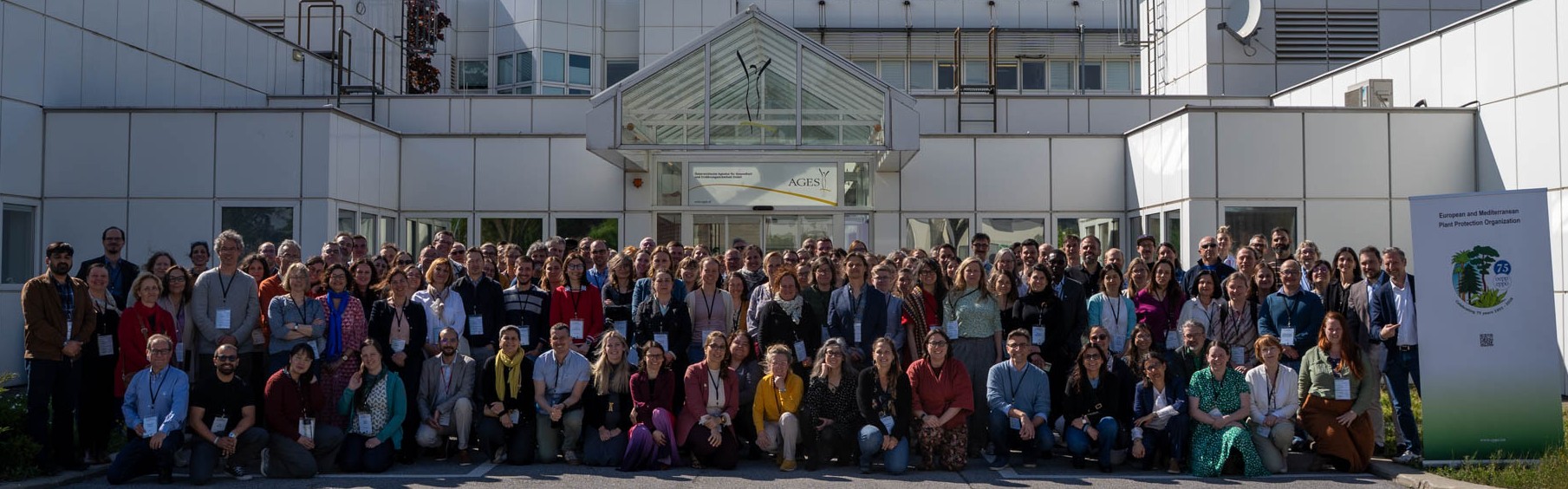
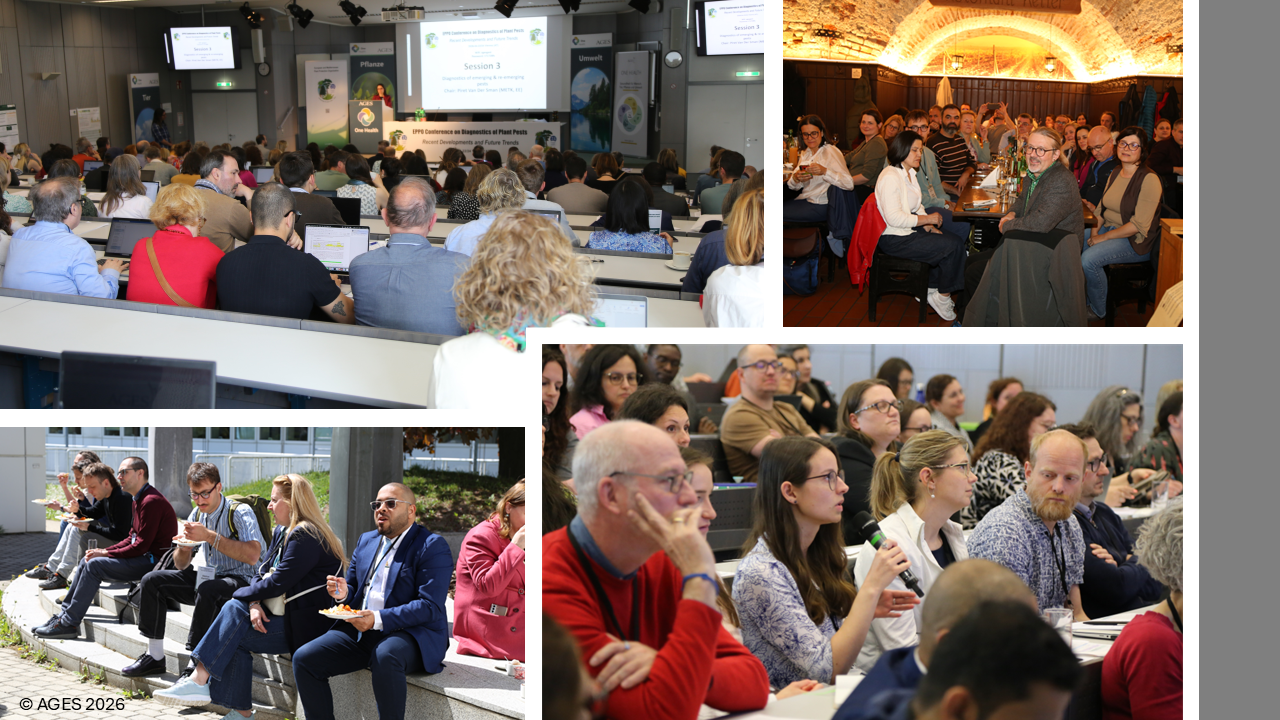
The EPPO Conference on Diagnostics of Plant Pests - Recent developments and future trends was hosted by the Austrian Agency for Health and Food Safety (AGES) and brought together 150 participants (diagnosticians, scientists, inspectors, and other stakeholders), from 31 countries, to explore the latest developments in plant health diagnostics and to provide a valuable opportunity to exchange experiences in the diagnosis of plant pests. The conference was organized with the support of an organizing committee (see below) composed of 10 experts from the EPPO region, three local organizers and three EPPO Staff members.
The conference opened with welcome speeches by Mr Nico Horn (EPPO Officer-in-Charge), Mr Johannes Fankhauser (Director-General of Directorate General II – Agriculture and Rural Development within the Austrian Federal Ministry for Agriculture, Forestry, Climate and Environmental Protection, Regions and Water Management) and Mr Anton Reinl (AGES Managing Director).
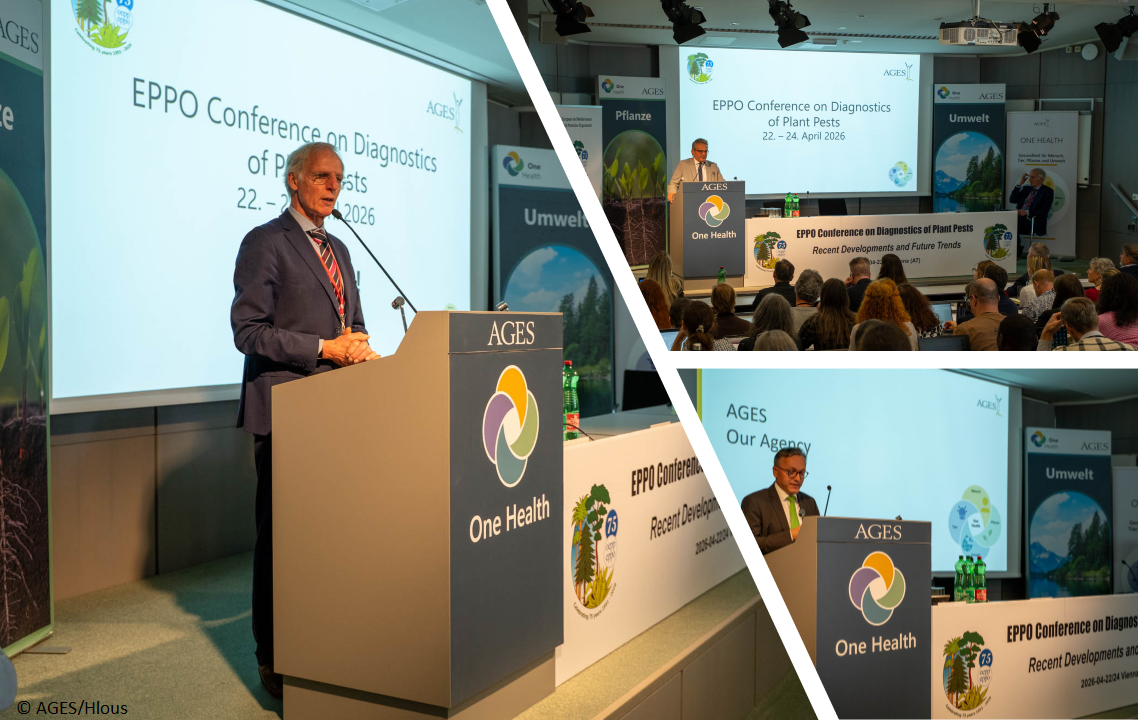
The Conference was organized around 5 sessions:
- Development and validation of tests chaired by Mr Nico Horn (EPPO Officer-in-charge)
- Advances in diagnostic technologies used in the field and in the laboratory chaired by Mr Heiko Zeibell (Julius Kuhn Institut (JKI), DE)
- Diagnostics of emerging and re-emerging pests chaired by Ms Piret van der Sman (Centre of Estonian Rural Research and Knowledge (METK), EE)
- Plant Health diagnostics from a broader perspective chaired by Mr Bart van de Vossenberg (Netherlands Food and Consumer Product Safety Authority (NIVIP-NVWA), NL)
- Initiatives for improving plant health cooperation in diagnostics chaired by Ms Helga Reisenzein (AGES, AT)
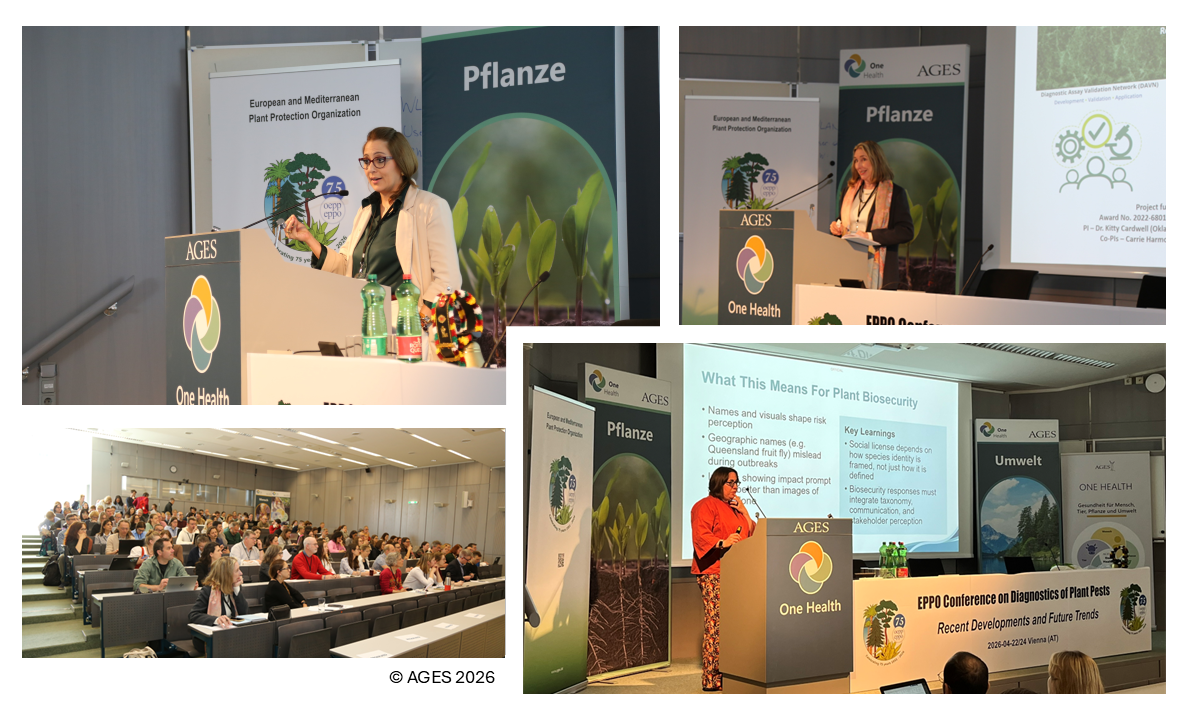
Three keynote speakers representing global organizations or organisations outside the EPPO region provided a broader view of some of the challenges faced by diagnosticians and possible solutions.
- Kitty F. Cardwell - Founder, Microbe Finder, MiFi LLC; retired from the Institute of Biosecurity and Microbial Forensics, Oklahoma State University, United States of America
- Monique Sakalidis - Department of Primary Industries and Regional Development & Harry Butler Institute, Murdoch University, Murdoch, Western Australia
- Adriana G. Moreira - International Plant Protection Convention
The conference also included round tables (download the conclusions of the round tables) and poster sessions.
All the abstracts presented at the conference can be found in the book of abstracts (download the book of abstracts).
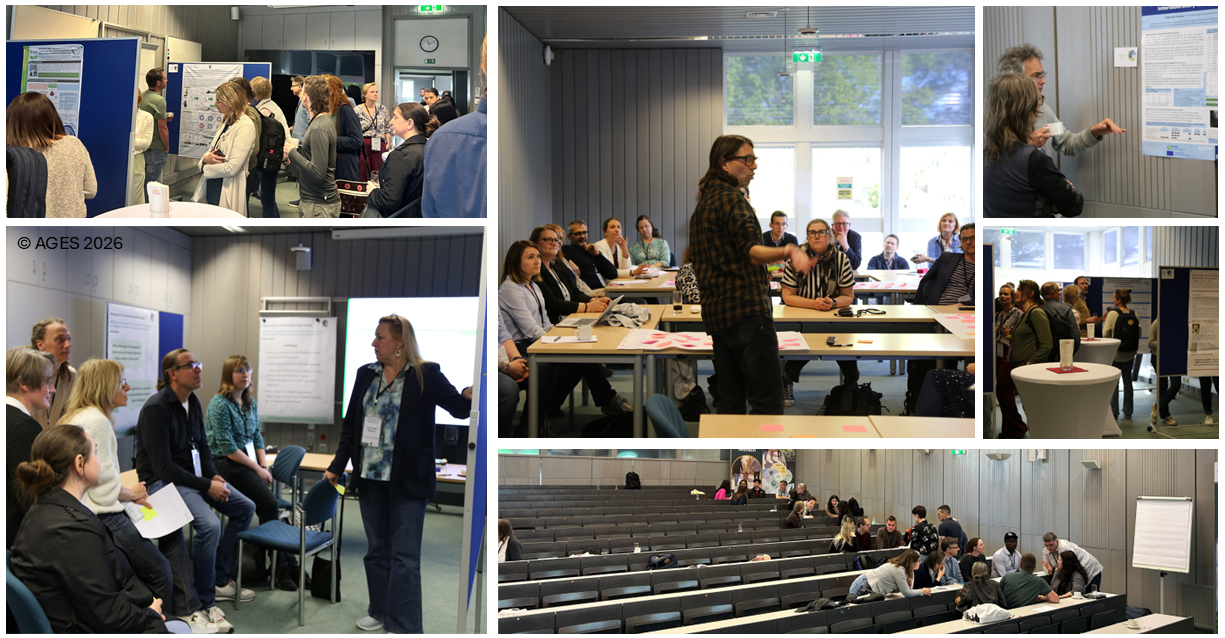
The EPPO Secretariat sincerely thanks all attendees for their active participation, for sharing their professional experience and knowledge, and for providing valuable inputs.
The EPPO Secretariat extends special appreciation to AGES for hosting the meeting, and for ensuring excellent organization, to the conference organizing committee who supported the EPPO Secretariat in the preparation of the conference agenda and to chairs of the sessions and moderators of the round tables. Finally, EPPO thanks the Austrian Federal Ministry Agriculture and Forestry, Climate and Environmental Protection, Regions and Water Management for introducing the Conference and offering the conference dinner.
Conclusions
- Validation and verification are part of the routine work of diagnostic laboratories but remains challenging due to the high number of quarantine pests and the lack of reference materials and resources. Relying on expertise and collaboration (e.g. via the organisation of interlaboratory comparisons and the sharing of validation data) is essential.
- The applicability of HTS is moving from research to diagnostics with laboratories starting to validate tests and obtaining accreditation for them. While this technique is opening new possibilities for laboratories (broad detection and identification of any pest present in a sample including uncharacterized or unexpected pests), classical methods (e.g. morphological tests, isolation) remain essential. The adoption of new technologies in the laboratory can be challenging and require time, expertise and resources.
- Bringing diagnostic technologies to the field is under progress but also challenging with potential technical, policy, operational and cultural barrier. However, they are important to allow more targeted inspections and better sampling. New technologies should fulfil inspectors needs and whenever possible be codesigned. Advanced methods like Volatile Organic Compounds (VOC) sensors hold potential.
- Given the number of regulated pests, the limited resources and the decrease in classical expertise, collaboration, networking, training and research coordination continues to be essential. The EPPO database on diagnostics expertise is an important tool to share information on expertise, validation data and proficiency tests and could be further tailored to better match the needs and offers of diagnostics laboratories.
Programme and presentations
Click on links in the programme to access the presentations.
|
Session 1: Development and validation of tests Chair: Nico Horn (EPPO) |
|
|
K. Cardwell (OSU, US) |
Keynote presentation |
|
S. Bosman (NVWA, NL) |
Expertise is a key component of fit-for-purpose validation and verification of tests |
|
J. Foucher (GEVES, FR) |
Detection of five different fungal taxa on flax seeds with one method |
|
A. Benčič (NIB, SI) |
|
|
S. Loreti on behalf of V. Scala (CREA, IT) |
|
|
B. Manser (Bioreba, CH) |
|
|
M. Pilotti (CREA, IT) |
|
|
B. Van De Vossenberg (NVWA, NL) |
|
|
A. Vučurović (NIB, SI) |
|
|
Session 2: Advances in diagnostic technologies used in the field and in the laboratory Chair: Heiko Ziebell (JKI, DE) |
|
|
U. Persen (AGES, AT) |
|
|
S. Kartakis (WUR, NL) |
|
|
J. Faria (INIAV, PT) |
Early detection of the pinewood nematode based on volatile organic compounds (VOCs) |
|
S. Van Der Linde (NVWA, NL) |
MALDI-TOF mass spectrometry to advance the diagnostics of closely related Fusarium species |
|
N. Luchi (CNR, IT) |
New molecular tools for early detection of forest pests and pathogens |
|
A. Parle (DCU, IE) |
Pushing the boundaries of in-field plant pathogen detection: Applying CRISPR-Cas technology for point-of-need testing for a resistant strain of Phytophthora infestans |
|
A.B. Ruiz-Garcia (IVIA, ES) |
Portable advanced molecular technologies for detection of plant pathogens |
|
L. Laurenson (Fera, GB) |
Can Nanopore Sequencing Transform Border Biosecurity Diagnostics? |
|
E. Everaert (ILVO, BE) |
|
|
Session 3: Diagnostics of emerging & re-emerging pests Chair: Piret Van Der Sman (METK, EE) |
|
|
M. Sakalidis (DPIRD, AU) |
Keynote presentation |
|
G. Silva (NRI, GB) |
|
|
V. Gualandri (FMACH, IT) |
|
|
R. Gazis (UFL, US) |
Strengthening Avocado Disease Surveillance through Enhanced Diagnostics for Scab and Laurel Wilt |
|
C. Douanla-Meli (JKI, DE) |
Development and validation of PCR tests to diagnose the new Trichoderma ear rot on maize |
|
J. Reiterer (AGES, AT) |
First report of Verticillium dahliae causing wilt of Pawpaw (Asimina triloba) |
|
A. Minuto (CeRSAA, IT) |
Bacterial Disease Outbreaks in Protected Crops and Nurseries: An Emerging Challenge |
|
Session 4: Plant Health diagnostics from a broader perspective Bart Van De Vossenberg (NIVIP-NVWA, NL) |
|
|
K. Hughes (APHA, GB) |
|
|
C. De Krom (NVWA, NL) |
Applying different workflows in plant virus diagnostics |
|
N. Mehle (NIB, SI) |
|
|
A.S. Van Bruggen (NVWA, NL) |
Challenges for diagnosis of tropical root-knot nematodes with a focus on Meloidogyne enterolobii |
|
B. Vicelli (FMACH, IT) |
|
|
T. Dreo on behalf of V. Grujić (NIB, SI) |
|
|
N. Pucci (CREA, IT) |
|
|
T. Dreo (NIB, SI) |
|
|
A. Aspin (Fera, GB) |
|
|
K. De Jonghe (ILVO, BE) |
Validation of Nucleic Acid extraction internal control procedures for diagnosis |
|
C. Pohn (AGES, AT) |
Interplay of morphological and molecular methods in entomology |
|
W. Menzel (DSMZ, DE) |
|
|
Session 5: Initiatives for improving plant health cooperation in diagnostics Chair: Helga Reisenzein (AGES, AT) |
|
|
A.G. Moreira (IPPC) |
Keynote presentation Beyond Standards: The IPPC’s Approach to Strengthening Global Diagnostic Cooperation |
|
L. Ferretti (CREA, IT) |
|
|
F. Munaut (EC, BE) |
European reference laboratories, a strong EU network supporting the plant health sector |
|
M. Grossi De Sá (ANSES, FR) |
EURL Nematodes: Collaboration to Strengthen and Harmonize Diagnostics |
|
R. Vreeburg (NVWA, NL) |
|
|
H. Reisenzein (AGES, AT) |
Bridging Expertise: The Power of Cross-Organisational Collaboration |
|
P.P. Parra Giraldo (ANSES, FR) |
|
|
A. Giesbers (NVWA, NL) |
EURL Virology – advancing reliable diagnostics by bringing laboratories together |
|
S. Rauch (ASTA, LU) |
Strategic pest prioritization and diagnostic synergies across borders in Luxembourg |
|
N. Denancé (GEVES, FR) |
Towards Safer Seeds: The Changing Landscape of Seed Health Testing |
Organizing Committee
Scientific Committee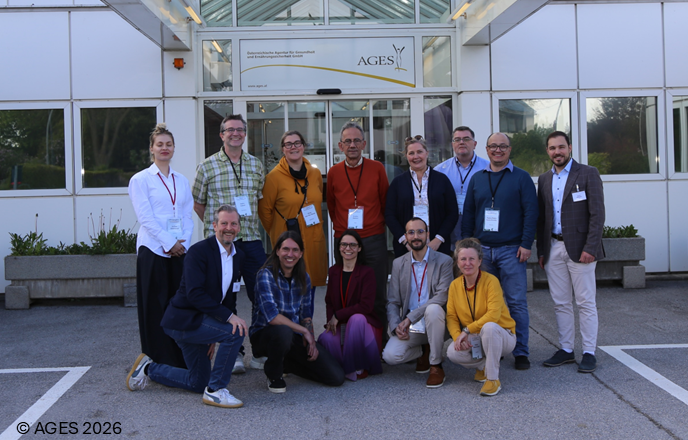
• Bart van de Vossenberg, NIVIP-NVWA (NL)
• Emilio Stefani, University of Modena and Reggio Emilia (IT)
• Heiko Ziebell, JKI (DE)
• Helga Reisenzein, AGES (AT)
• Johan Van Vaerenbergh, Institute for Agricultural and Fisheries Research (BE)
• Lee Robertson, National Center for Agricultural and Food Research and Technology (ES)
• Maria Inácio, National Institute of Agricultural and Veterinary Research (PT)
• Pedro-Pablo Parra Giraldo, The French Agency for Food, Environmental and Occupational Health & Safety (FR)
• Piret van der Sman, METK (EE)
• Tulin Sarigulertek, Ministry of Agriculture and Forestry (TR)
Local Organizing Committee at AGES
• Dennis Bergamo
• Helga Reisenzein
• Philipp Hofer
EPPO Secretariat
• Anfisa Nikolaeva
• Charlotte Trontin
• Yassine Aoutil