
EPPO Workshop for Inspectors: Innovative Strategies for Phytosanitary Inspections
Den Haag, NL, 2025/11/18 - 2025/11/20
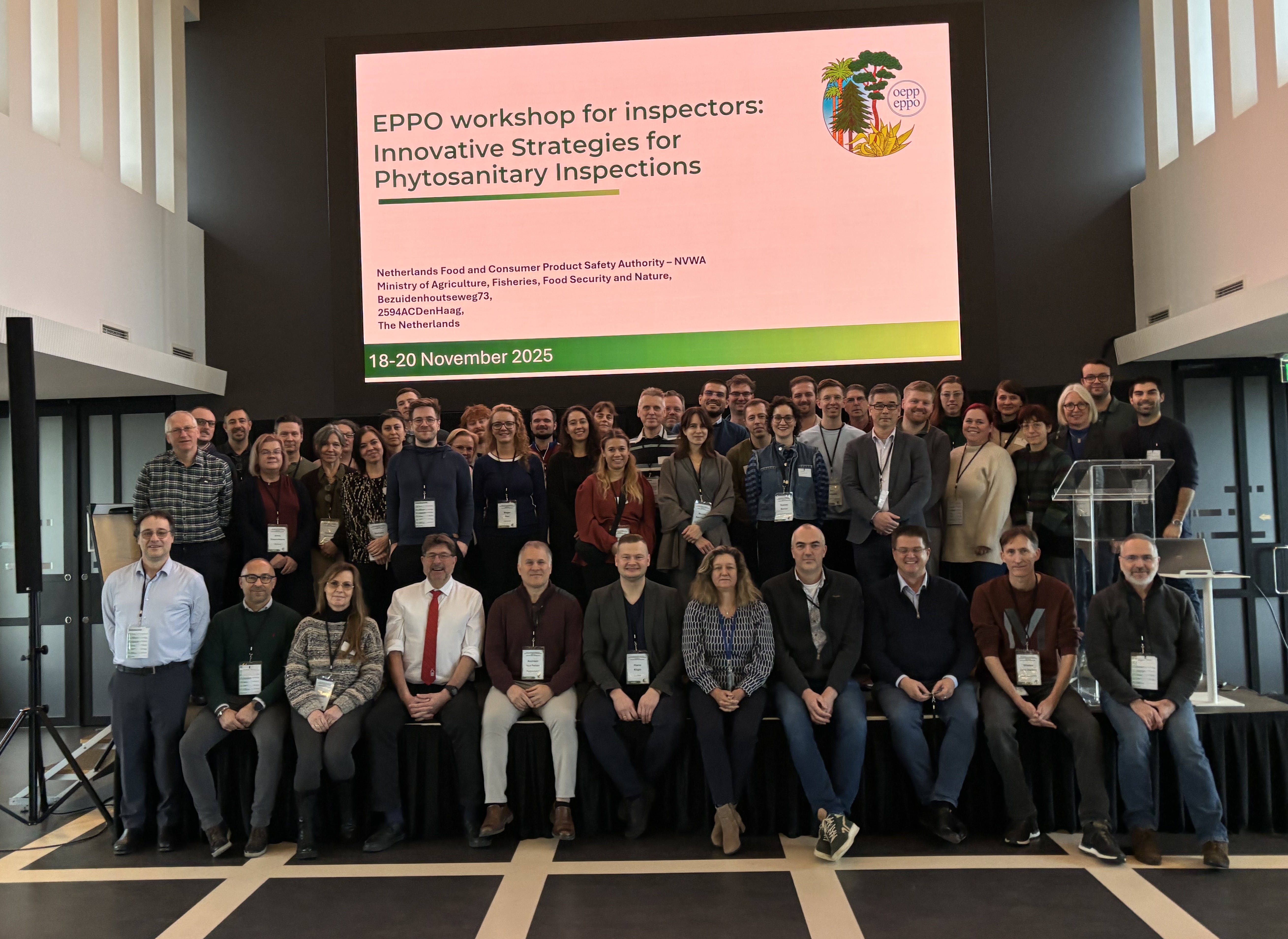
Group photo of workshop attendees
The EPPO Workshop for Inspectors was hosted by the Netherlands Ministry of Agriculture, Fisheries, Food Security and Nature and attended by 58 participants, from 19 EPPO countries. It was organised in collaboration with the Netherlands Food and Consumer Product Safety Authority. Ms Tikka (EPPO Director-General) and Mr Corné van Alphen (NPPO NL) opened the workshop. Mr Tanner (EPPO Scientific Officer), Ms Nikolaeva (EPPO Administrative Officer) and local organizers facilitated the delivery of the Workshop.
The aims of the Workshop were to:
- Present current advances in methods for phytosanitary inspections
- Brainstorm and share experiences through practical sessions
- Facilitate networking between inspectors from across the EPPO region
The EPPO Secretariat sincerely thanks all attendees for their active participation, for sharing their professional experience and knowledge, and for providing valuable input. The EPPO Secretariat extends special appreciation to the Netherlands Ministry of Agriculture, Fisheries, Food Security and Nature for hosting the meeting, and all members of the Workshop organizing committee who developed an excellent programme.
Workshop programme
The Workshop was comprised of four sessions:
- New technologies for inspections
- Inspection of passenger luggage at points of entry
- eCommerce
- Information and communication for inspectors
Each session included a combination of oral presentations and practical exercises, including demonstrations, interactive discussions and role play.
Practical Sessions
New technologies for inspections
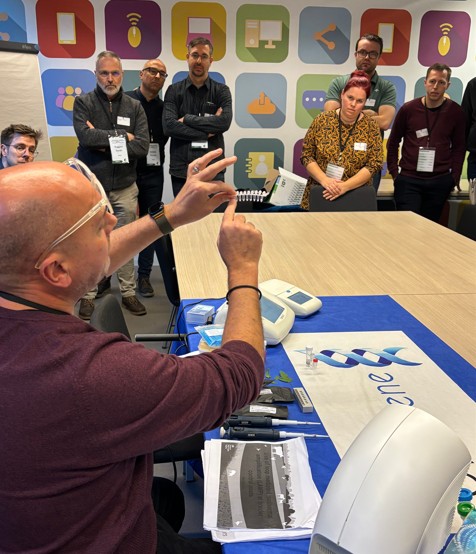
Two hands-on demonstrations were conducted where participants gained an understanding of the use of hand held devises and drone-based hyper- and multispectral sensors and sensing of plant volatiles related to Phytoplasma infection in vineyards. The demonstration concluded by introducing an application of field spectroscopy to screen for symptoms.
In addition, a demonstration of the OptiGene Genie MDX4A Point of Entry Molecular Diagnostic Platform was given. Developed for on-site, point of entry identification of regulated pests (including diseases) the MDX4A and innovative microfluidic cartridge system forms part of the Port Screen 2 project, a project consortium that includes OptiSense Limited, Fera Science Limited (GB) and APHA (Animal and Plant Health Agency, GB). The participants were shown how the MDX4A platform can provide solutions for enhanced border and in-land inspections while addressing the real-life challenges of detection and identification of regulated pests.
Inspection of passenger luggage at points of entry
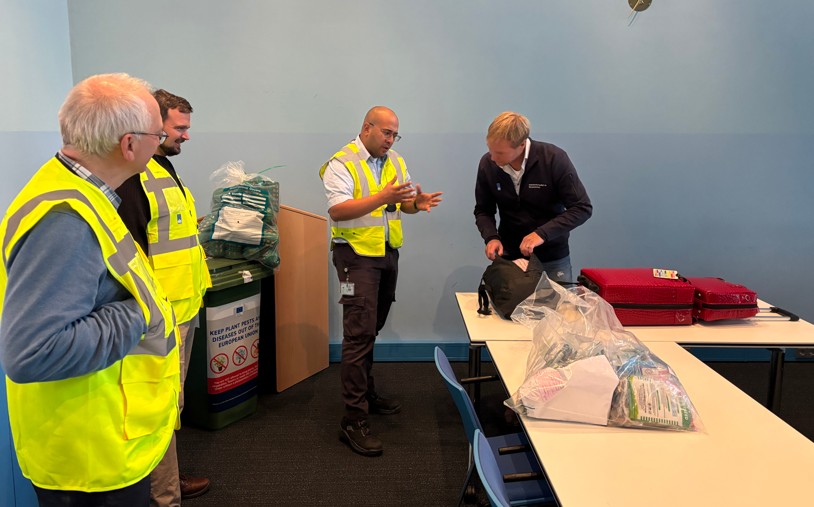
This practical session gave participations hands on experience in analysing a Phytosanitary Certificate for completeness and authenticity. Inspectors from the Netherlands NPPO presented both real and fake Phytosanitary Certificates and participants had to decided which was which.
Inspectors from the NPPO NL and Customs also conducted a role play exercise involving participants. The role play was based on a passenger with compliant and non-compliant articles in their luggage and participants had to assess which were allowed and which were not.
eCommerce
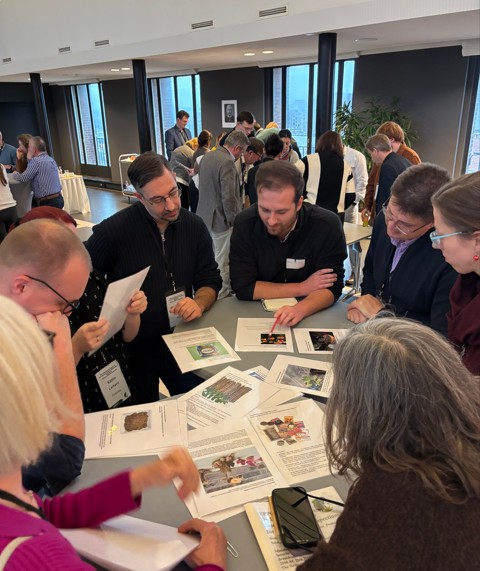
A hands on practical session was organised where participants were divided into six groups and each group was presented with real eCommerce adverts that contain plants, plant products or other regulated articles. Each group had to identify which adverts contain material of concern to plant health. For the second session, each group assessed a list of keywords to identify parcels of plant health relevance at points of entry. Following this, each group inspected the contents of high risk articles and decided whether they were compliant or non-compliant. Following these exercises, a feedback session was arranged to discuss key aspects.
Information and communicaiton for inspectors
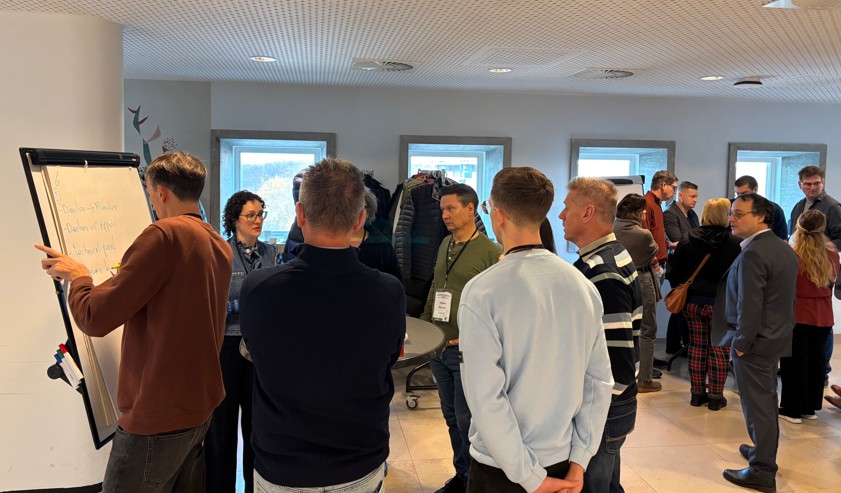
Participants were divided into smaller groups where each group was a team of inspectors dealing with communication issues as part of a pest outbreak in a fictitious country. The EPPO Standard PM 9/10 Generic elements for contingency planning describes internal communication and documentation, and external communication as two of the 12 essential elements in a contingency plan. Each group were presented with six requests concerning communication, ranging from a request to develop an internal communication structure to how to communicate with a land owner who is refusing access to land. Following the exercise, a feedback session was arranged to discuss how each group approached the tasks.
Presentations
You can access the presentations from the workshop by clicking on the links below.
Session 1: New technologies for inspection
Use of loop mediated isothermal amplification (LAMP) at border control posts (Ben Walpole, GB)
Use of ArcGIS digital tools in the proactive surveillance of fruit flies and the facilitation of access to international trade (Neakoh Mengyi, CM)
EFSA’s support for more effective plant health inspections (Francesca Salinari & Sybren Vos, EFSA)
SmartGrape project (Meredith Schuman, CH)
UK perspective of using new technologies and what is restricting further implementation (Kelvin Hughes, GB)
Session 2: Inspection of passenger luggage at points of entry
Official controls of passenger luggage at points of entry (Katrin Kaminski, DE)
Passenger baggage plant health checks upon entry to Dublin airport (Ciarán Cullen, IE)
Strengthening Biosecurity at the Air Border. New Zealand’s Current and Future State (Allanah Gilbert, Gavin Eiloart, NZ)
Conducting passenger baggage inspections for international arrivals (Andrew Palmer, AU)
Session 3: eCommerce
eCommerce: IPPC tools and activities (Thorwald Geuze, NL)
Safeguarding Plant health in Ireland: Navigating the E- Commerce challenge together (John Eivers, IE)
Chinese Unsolicited Seed - United Kingdoms NPPO experience (Paul Bratby, GB)
Addressing Agricultural Smuggling in the United States (Julie Hong-Sakowski, USA)
Session 4: Information and communication for inspectors
EPPO guides on information and communication: available materials and examples of innovative ways to communicate (Katrin Kaminski, DE & Hans Meerman, NL)
EPPO PM 3 Standards - disseminating information to inspectors in the EPPO region (Rob Tanner, EPPO)
Communication for phytosanitary inspections: case study in Lombardy Region (Alessandro Bianchi, IT)