

75th meeting of the Panel on Phytosanitary Measures
EPPO Headquarters, 2026-03-24/26
The Panel met on 2026-03-24/26 at the EPPO Headquarters in Paris. It was attended by eight participants, each belonging to a different EPPO member country, by an expert from the European Commission and one from EFSA, as well as by the EPPO Secretariat (the meeting was chaired by Mr Picard and supported by Mr Musolin). The main task of this Panel is to evaluate risks presented by specific pests and design phytosanitary measures to avoid their introduction and spread (see ‘link’ for composition and terms of reference of the Panel).

Group photo of the Panel on Phytosanitary Measures (2026-03-24/26)
EPPO Lists of pests recommended for regulation
Recommendations for regulation by EPPO are made either based on EPPO Pest Risk Analyses (PRAs) prepared by Expert Working Groups (EWG) or on PRA reports based on national/EU PRAs. During this meeting the Panel reviewed the following documents:
- Clavibacter nebraskensis – a draft EPPO PRA,
- Potexvirus citriflavivenae (Citrus yellow vein clearing virus, CYVCV) – a draft EPPO PRA was revised following new reports in Italy and Spain,
- Litylenchus crenatae (beech leaf disease) – a PRA report based on a PRA for the United Kingdom and an Irish PRA.
- Harringtonia lauricola (laurel wilt) and its vector Xyleborus glabratus – a draft PRA report based on the EPPO Study on bark and ambrosia beetles of non-coniferous wood, and additional publications.
The Panel recommended to the EPPO Working Party on Phytosanitary Regulations the addition of C. nebraskensis, L. crenatae, H. lauricola, and X. glabratus to the EPPO A1 List. In light of recent reports in the EPPO region triggering higher uncertainty on pest distribution and impact, the Panel recommended postponing for one year any decision on recommending CYVCV for regulation as a quarantine pest by EPPO. In the meantime, a circular should be sent to EPPO member countries and the draft EPPO PRA shared with them. Other PRA reports were discussed and will be reviewed at the next Panel meeting.
The draft procedure for removing pests from the EPPO A1 and A2 Lists was tested by preparing PRAs on three pests: Cacoecimorpha pronubana (Lepidoptera: Tortricidae), ‘Candidatus Phytoplasma ulmi’ and strawberry latent C virus (STLCV). These PRAs focused specifically on criteria likely to affect their categorisation as quarantine pests. Following review, the Panel recommended removing C. pronubana from the EPPO A2 List, and STLCV from the EPPO A1 List. STLCV was proposed for delisting due to taxonomic considerations, while C. pronubana was considered too widespread, likely to have reached the limits of its natural outdoor range in the Palaearctic, and was considered already effectively managed by the horticultural industry. The Panel will review the case further for ‘Ca. P. ulmi’.
Recent information received on incursions of EPPO A1 pests in the EPPO region was shared with the Panel. Following new information received on the situation of Scirtothrips aurantii (Thysanoptera: Thripidae), the Panel recommended moving it from the EPPO A1 to the EPPO A2 List. The Panel specifically discussed the updated situation for Pochazia shantungensis (Hemiptera: Ricaniidae; EPPO Alert List) following the previous year’s decision not to add it to EPPO A2 List (see below).
Alert List
The Panel reviewed the EPPO Alert List (the purpose of this List is to warn countries about possible new risks, and in certain cases to propose candidates for PRA, and, if relevant, recommend them for regulation). Considering that an alert had been given, the Panel recommended deletion of Atherigona reversura (Diptera: Muscidae), Blissus insularis (Hemiptera: Blissidae), P. shantungensis, Pseudips mexicanus (Coleoptera: Scolytinae), and Phytophthora pluvialis from the Alert List. Additional reasons for deletion from the List include the lack of evidence of economic impact in the EPPO region for P. mexicanus (a draft EPPO PRA is under review) and P. shantungensis (see the EPPO PRA report), and the numerous outbreaks and interceptions of P. shantungensis in the region suggesting that the species may already be more widely distributed than previously reported.
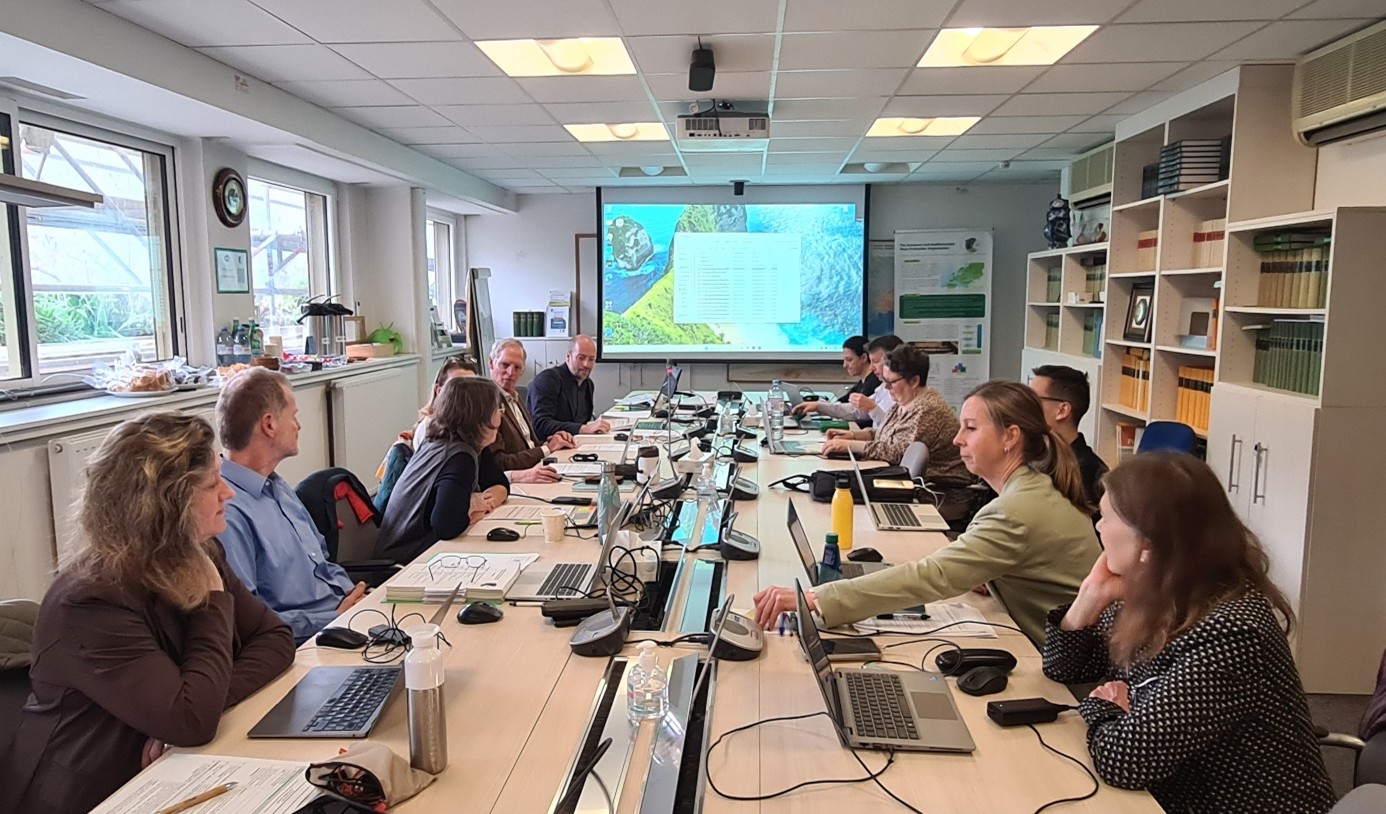
Photo of the Panel during the meeting (2026-03-24/26).
Pest Risk Analysis
Priorities for the organization of EWGs for PRA for the coming year were discussed. The four highest priorities for PRA identified by the Panel were: (1) Pyricularia oryzae Triticum lineage (also covering the likelihood of host jump from the Lolium lineage); (2, equal priority) vascular streak dieback and Amrasca biguttula (Hemiptera: Cicadellidae); and (4) Anoplophora horsfieldii (Coleoptera: Cerambycidae).
The Panel recommended that a PRA report for Elsinoë australis and E. fawcettii is prepared in 2027, the report would be based on the EFSA pest categorisation and would provide further analysis on the likelihood for transfer from the citrus fruit pathway.
The priorities for EPPO PRAs and PRA reports will be discussed with the Working Party on Phytosanitary Regulations.
Outcome of the webinar on mapping and modelling to support EPPO PRA activities organized in 2026-01 was reported to the Panel. The webinar allowed the EPPO Secretariat to identify new experts in mapping and modeling for EPPO PRA EWGs or who could serve as members of a group of experts to discuss methodological aspects. The Panel was interested in the proposals to consider developing guidance documents on quality checking of pest distribution data and compiling sources, as well as a decision-support scheme to help to determine when mapping and modelling are feasible and needed for EPPO PRAs.
After reviewing the dedicated study developed with an economist as part of the EPPO PRA for C. nebraskensis, Panel members discussed ways to improve impact assessment in EPPO PRAs in order to better support decision-making by risk managers. The Panel suggested to focus on the key factors to consider and highlight how the use of scenarios (even qualitative ones) can support the assessment process. It was also recommended to clarify that quantitative analyses should be undertaken only when sufficient data and resources are available, and when such analysis can provide a clear added value (i.e. in cases where the level of impact is neither already well established nor highly uncertain due to lack of information). These principles should be progressively implemented in future EPPO PRAs.
The Panel was also updated on recent EFSA mandates and PRA activities in member countries. EFSA activities include the development of the new protocol on rapid PRAs, the updated PRA on Xylella fastidiosa, mandates on spread and control of Bursaphelenchus xylophilus (pine wood nematode), and a commodity risk assessment of asparagus spears.
Standards
A revision of PM 4/17 Certification scheme for olive trees and rootstocks as well as a draft PM 3/NEW Post-entry quarantine for Vitis were reviewed by the Panel and will be sent for country consultation shortly after the Panel. Needs for revision of other Standards by the Panel was also discussed.
Other specific topics
After a presentation by EFSA on the use of artificial intelligence (AI) in EFSA work, a brainstorming session on how AI can be utilized in the work of EPPO was organized. Ideas can be used for future EPPO activities.
The next Panel meeting is planned for 2026-10-6/8 at EFSA, in Parma (Italy).