

76th EPPO Council Session
Paris, 2026-09-22/24
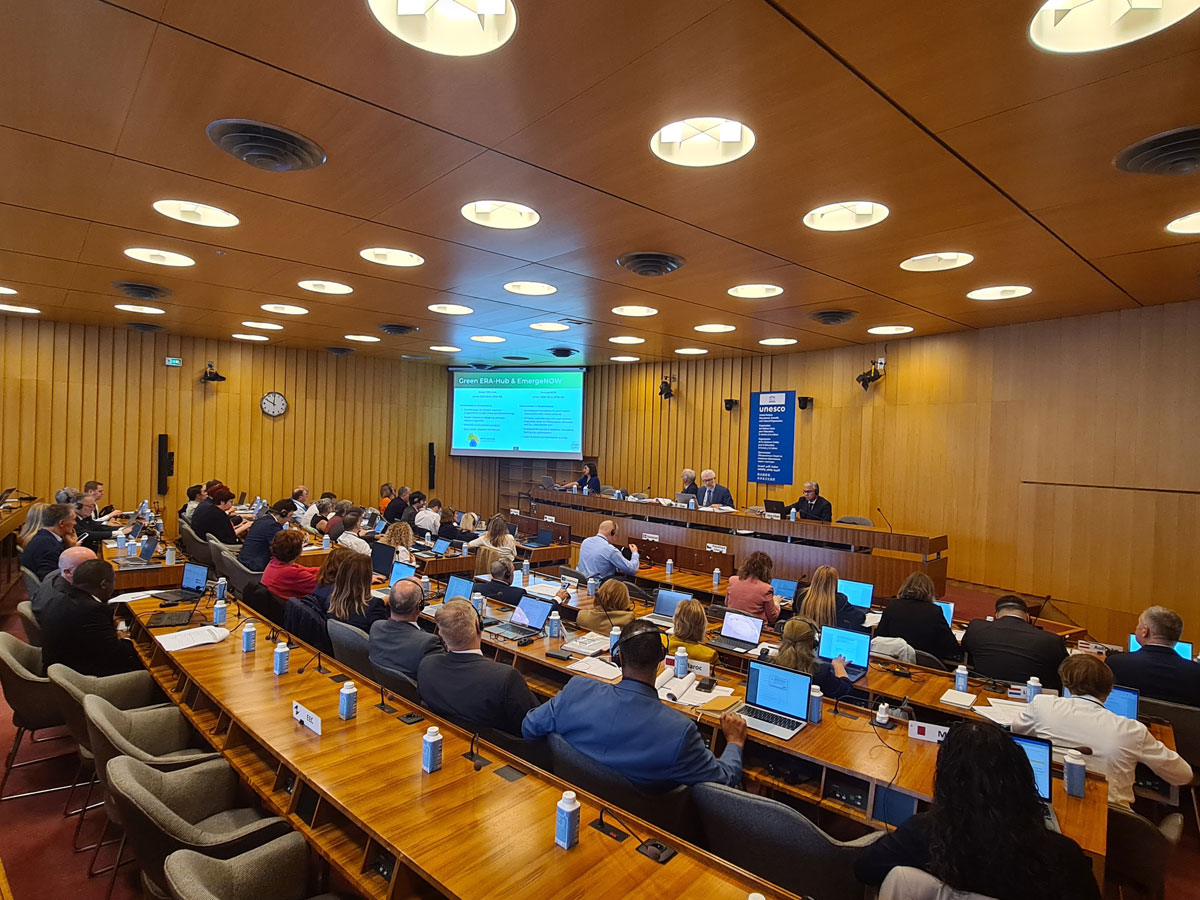
The 76th Session of Council took place in the UNESCO headquarters in Paris from 22nd to 24th September 2026.
The Council Session was preceded by meetings of the Accounts Verification Panel (online) and the Executive Committee, and followed by the Euphresco Governing Board. Mr Van Herzele (EPPO Chair) welcomed representatives from 37 EPPO Member Governments as well as the European Commission and the Eurasian Economic Commission (permanent observers). In addition, 2 more countries were represented by other countries and could participate in the voting process.
Member Governments were updated on the technical work being carried out by EPPO Panels under the guidance of the Working Party on Phytosanitary Regulations and the Working Party on Plant Protection Products.
They also received reports on some other activities, such as the RNQP Project part 2, EPPO’s involvement in research projects (BeXyl, Green ERA-Hub, EmergeNOW, IAS Risk Assessment, FORSAID and PhytoPrism) and the EPPO Jens-Georg Unger Plant Health Fellowship.
A number of new and revised EPPO Standards were adopted (see below) and five new pests were added to the EPPO A1 and A2 Lists of pests recommended for regulation as quarantine pests.
Council accepted the Annual Report for 2025, as well as the budget, work programme and calendar of meetings for 2027.
Member governments were informed about the participation of EPPO in global activities (e.g. IPPC regional workshops, Technical Consultation among RPPOs, CPM, IPPC bodies, SPG). The nomination of European representatives in IPPC bodies, and a revised EPPO procedure for coordinating nominations in IPPC bodies were approved.
As a result of other statutory elections, the EPPO Executive Committee (as of January 2027) will be composed of Denmark, France, Germany, Kyrgyzstan, Lithuania, the Netherlands and Türkiye. For the Accounts Verification Panel, Austria, Spain and Sweden will serve as members; Croatia and Georgia will serve as alternates.
The Council decided to terminate the contract of the EPPO Director-General and to recruit a new Director-General. The Council appointed Mr Horn as Acting EPPO Director-General until the new Director-General assumes office.
On September 24th, Council celebrated the EPPO 75th Anniversary. They adopted a declaration.
Standards approved by EPPO Council in 2026-09
New and revised Standards will be published in due course in the EPPO Bulletin. They will also be accessible from this website and stored in the EPPO Global Database.
EPPO Standards PM 1 – General Phytosanitary Measures
Additions to the A1 List (pests absent from the EPPO region)
- Clavibacter nebraskensis,
- Harringtonia lauricola and its vector Xyleborus glabratus
- Litylenchus crenatae
Additions to the A2 List (pests locally present in the EPPO region)
- Senecio angulatus (plant)
Transfer from the A2 to the A1 List
- Stenocarpella macrospora
Deletion from the A1 List
- Strawberry latent C virus (STLCV)
- Grosmannia wageneri [following changes in taxonomy]
Deletion from the A2 List
- Cacoecimorpha pronubana
Changes in taxonomy in the A1 List
- Grosmannia wageneri is replaced by Leptographium wageneri, L. ponderosum and L. pseudotsugae
EPPO Standards PM 3 – Phytosanitary procedures
- Revision of PM 3/72 General guidelines common to inspection of places of production and consignments
- Revision of PM 3/73 Compliance procedures for consignments of Fragaria plants for planting
- PM 3/NEW Post-entry quarantine forVitis
The following Standard has been WITHDRAWN:
- PM 3/34 Barley stripe mosaic Hordeivirus
EPPO Standards PM 4 – Production of healthy plants for planting
- Revision of PM 4/17 Certification scheme for olive trees and rootstocks
EPPO Standards PM 7 – Diagnostic protocols for regulated pests
- Revision of PM 7/129 Generic guidelines for the use of DNA barcoding as an identification tool for a number of regulated pests
- PM 7/NEW DNA barcoding as an identification tool for a number of regulated arthropods
- PM 7/NEW DNA barcoding as an identification tool for a number of regulated bacteria
- PM 7/NEW DNA barcoding as an identification tool for a number of regulated fungi and oomycetes
- PM 7/NEW DNA barcoding as an identification tool for a number of regulated invasive alien plant species
- PM 7/NEW DNA barcoding as an identification tool for a number of regulated nematodes
The Council was informed that the following diagnostic protocols have been approved following the fast track procedure since the last Council meeting:
- PM 7/38 Unaspis citri (revision)
- PM 7/52 Diaphorina citri (revision)
- PM 7/113 Potexvirus pepini (Pepino mosaic virus) (revision)
- PM 7/NEW Xanthomonas phaseoli pv. phaseoli and Xanthomonas citri pv. fuscans
- PM 7/NEW Tobamovirus maculatessellati (tomato mottle mosaic virus)
- PM 7/NEW Emaravirus rosae (rose rosette virus)
EPPO Standards PM 9 – National regulatory control systems
- PM9/NEW Zizania latifolia
Withdrawal of EPPO PM Standards
- PM 3/34 Barley stripe mosaic Hordeivirus
EPPO Standards PP 1 – Efficacy Evaluation of Plant Protection Products
Specific Standards
- PP 1/NEW Glomerella leaf spot and apple bitter rot on apple
- PP 1/NEW Weevils on maize and sunflower
- PP 1/NEW Popillia japonica on grapevine and maize
- PP 1/NEW Gall mites in black currant, gooseberry and hazelnut
- PP 1/NEW Efficacy evaluation of herbicides when long-term control of perennial weeds is claimed
- Revision of PP 1/005 Venturia inaequalis and V. pyrina
- Revision of PP 1/006 Adoxophyes orana
- Revision of PP 1/009 Delia radicum on vegetable brassica crops
- Revision of PP 1/013 Ostrinia nubilalis, Sesamia nonagrioides and Sesamia cretica on maize and withdrawal of PP 1/187 Sesamia nonagrioides on maize
- Revision of PP 1/015 Tetranychid mites in orchards
- Revision of PP 1/133 Tetranychid mites in vineyards
- Revision of PP 1/156 Accelerated ripening of arable oilseed Brassica crops, legumes and sunflower
- Revision of PP 1/168 Tetranychid and tarsonemid mites on ornamentals
- Revision of PP 1/192 Mites on strawberry
- Revision of PP 1/267 Thrips on Allium crops
General Standards
- PP 1/NEW Principles for conducting efficacy trials for PPP adjuvants to define their field of use
- Revision of PP 1/207 Effects on succeeding crops
- Revision of PP 1/225 Minimum effective dose
- Revision of PP 1/241 Guidance on comparable climates (minor revision)
- Revision of PP 1/256 Effects on adjacent crops
- Revision of PP 1/257 Efficacy and crop safety extrapolations for minor uses (minor revision)
- Revision of PP 1/306 General principles for the development of co-formulated mixtures of PPPs (minor revision)
Withdrawal of EPPO PP Standards
- PP 1/187 Sesamia nonagrioides on maize (merged with PP 1/013 (4))