
EPPO activities on plant protection products
The functions set out in the EPPO Convention include advising member governments on the measures necessary to register or authorize plant protection products, and to control their marketing and use on their territories, in compliance with the principles of good plant protection practice as well as, whenever possible, the principles of integrated control. In order to achieve this goal, a large number of EPPO Standards have been developed, mainly in the area of efficacy evaluation of plant protection products which is one of the key elements when establishing registration dossiers. It should be noted that other key elements of registration (i.e. toxicology and residues) are not part of EPPO’s work but are addressed by other international bodies.
EPPO Standards on plant protection products are intended to be used by member governments, in their capacity as authorities responsible for registration of plant protection products and related advisory services. Some of the EPPO standards are also of interest to agrochemical companies which apply for registration of their products. In the area of plant protection products, EPPO ‘s technical work is carried out by several Panels (groups of experts) under the supervision of the EPPO Working Party on Plant Protection Products.
In addition to the development of Standards, EPPO regularly organizes Conferences and Workshops on themes related to plant protection (e.g. application techniques, forecasting models and computer applications in plant protection, resistance of pests to plant protection products).
Since 2015, EPPO is hosting the EU Minor Uses Co-ordination Facility (MUCF). The mission of the Facility is 'to enable farmers in the EU to produce high quality crops by filling minor uses gaps through efficient collaboration to improve availability of chemical and non-chemical tools within an integrated pest management (IPM) framework’. More information can be found on the MUCF website  .
.
Efficacy evaluation of plant protection products
EPPO Standards – PP 1 Efficacy evaluation of plant protection products
 These standards (more than 300) describe the conduct of field and glasshouse trials carried out to assess the efficacy of plant protection products (e.g. insecticides, acaricides, fungicides, herbicides, plant growth regulators) against specific pests by comparison with reference product(s). Each standard gives details on experimental conditions, application of treatments, mode of assessment, recording and measurements, and on how to report results. In addition to specific Standards, a set of general standards (e.g. design and analysis of efficacy evaluation trials, phytotoxicity assessment) has been developed. All PP1 Standards are stored in a dedicated database. Access to general standards is free whereas access to specific standards is subject to annual fees.
Extrapolation for minor uses
Minor uses have become an international issue where cooperation is needed. Although this issue is now mainly addressed within the EU Minor Uses Co-ordination Facility (MUCF), EPPO continues to develop lists of acceptable extrapolations for minor uses. These lists prepared for specific crop groups or pest groups are to be used in conjunction with the EPPO Standard PP 1/257 Efficacy and crop safety extrapolations for minor uses and are stored in a database.
EPPO extrapolation for minor uses
EPPO Database on PPP Data Extrapolation
Zonal efficacy assessment
In the context of the EU zonal evaluation of plant protection products and mutual recognition, EPPO has developed guidance on how to establish zonal maps (i.e. areas with comparable climates) and on the principles that should be followed when designing zonal efficacy evaluation trials. In addition, examples of zonal efficacy evaluations have been collected.
EPPO Standards related to zonal efficacy assessment and examples of zonal efficacy evaluations
Good Experimental Practice (GEP)
In the management of efficacy evaluation trials, principles of Good Experimental Practice (GEP) have to be followed to ensure high quality and comparability of trial results. EPPO has developed a Standard (PP 1/181) on the conduct and reporting of efficacy evaluation trails, including good experimental practice.
Harmonized dose expression for the zonal evaluation of PPPs in high growing crops
In three-dimensional crops, the leaf wall area (LWA) unit is becoming a common dose expression method and discussions are ongoing within EPPO about its harmonization. Following one of the recommendations expressed at the EPPO Workshop on harmonized dose expression for the zonal evaluation of plant protection products in high growing crops (Vienna, 2016-10-18/20), a Glossary of terms and a Guide for measurement of parameters in high growing crop trials were published in July 2018.
EPPO documents on dose expression for PPPs in high growing crops
Resistance to plant protection products
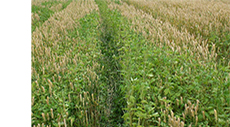 Management strategies to limit the development of resistance of pests to plant protection products are specifically being discussed within the EPPO Resistance Panel. A standard on resistance risk analysis has been developed, and several workshops have taken place to share knowledge among EPPO members on this issue. In 2020, a new database on Resistance Cases was launched.
EPPO activities on resistance to plant protection products
EPPO Database on Resistance Cases
Harmonized classification of plant protection uses
 In order to facilitate communication, EPPO has developed a harmonized classification of plant protection uses. This is of particular relevance to registration authorities operating in the framework of the mutual recognition and zonal assessment called for in EU Regulation
List of databases on registered plant protection products
 The question of creating a database on registered products and their uses in Europe has been raised several times within EPPO but for the moment, it has been decided that the EPPO Secretariat should simply gather lists of existing databases in Europe.
List of databases on registered plant protection products in the EPPO region
Good Plant Protection Practice
From the early 1990s to 2004, EPPO developed a series of specific standards on Good Plant Protection Practice. These standards described the optimal practice in protecting specific crops against their pests, including pathogens and weeds. So for each major crop of the EPPO region, they cover methods for controlling pests (including pathogens and weeds), with plant protection products, by cultural methods, by use of resistant cultivars, by biological control etc. The main pests present in all parts of the EPPO region were considered. For each pest, details were given on biology and development, appropriate control strategies were described, and if relevant, examples of active substances which could be used for chemical control were mentioned, if relevant. More than 30 standards were prepared by the Panel on Good plant protection practice and officially approved by the EPPO Council. These Standards contain useful guidance, but they have not been updated since 2004.
Environmental Risk Assessment of Plant Protection Products
From the early 1990s to 2002, EPPO in collaboration with the Council of Europe developed a series of standards as part of a decision-making scheme for the environmental risk assessment of plant protection products. They provided guidelines on how to assess the potential impact of particular plant protection products on various elements of the environment (e.g. air, soil, ground water, surface water, honeybees, non-target terrestrial arthropods, terrestrial vertebrates, non-target higher terrestrial plants). However, the EPPO Council decided in 2018 to withdraw these Standards as they were no longer updated.
Useful information sources and websites
- European Commission – Pesticides
- EFSA (European Food Safety Authority)
- FAO – International Code of Conduct on Pesticide Management
- CropLife Europe